
UNBS, IEC deepen cooperation to boost safety and quality of electrical products
By Kyeyune Ali
The Uganda National Bureau of Standards (UNBS) and the International Electrotechnical Commission (IEC) have renewed their commitment to strengthening cooperation on standards and conformity assessment to improve the safety, quality and reliability of electrical and electronic products on the Ugandan market.
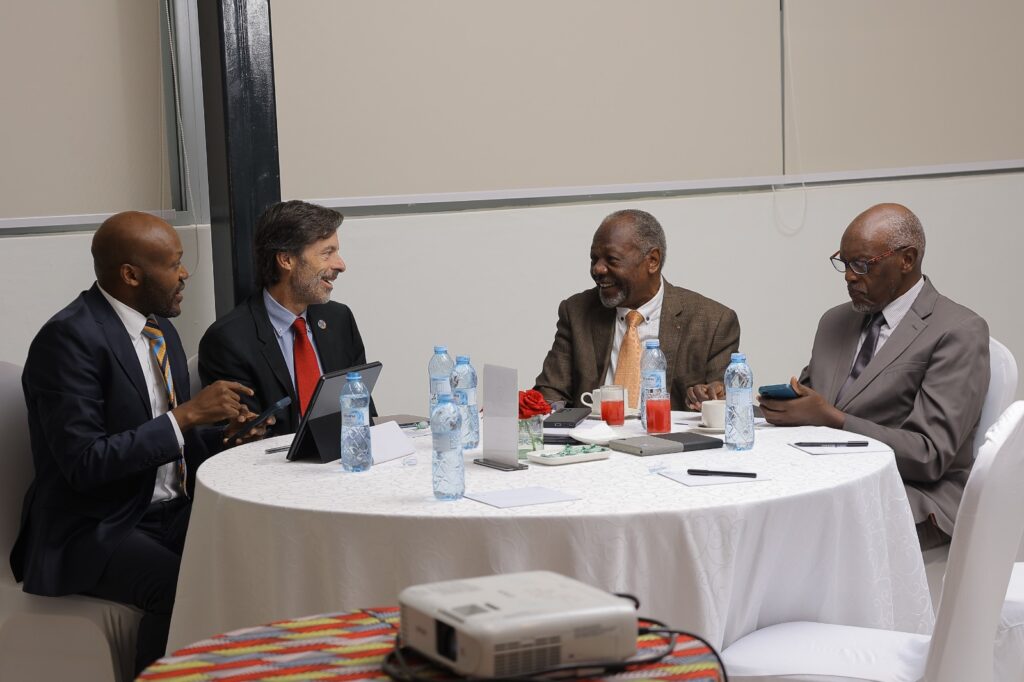
The commitment was made on Friday during a breakfast meeting hosted by UNBS at Four Points by Sheraton, Kampala, bringing together IEC Secretary-General and CEO Philippe Metzger, UNBS officials, government representatives, members of Uganda’s IEC National Committee, academia, industry players and other stakeholders.
The meeting was part of Metzger’s three-day visit to Uganda from September 16 to 18, which included engagements at UNBS Standards House in Bweyogerere and a tour of UNBS laboratories.
The discussions focused on strengthening Uganda’s participation in IEC standardisation and conformity assessment while using international standards to support technological development, manufacturing, energy, trade and industrial transformation.
Uganda has been an IEC Associate Member since 2020, while UNBS has adopted more than 288 IEC standards covering electrical appliances, cables, electric mobility, solar photovoltaic systems, lighting and renewable energy technologies.
Speaking at the meeting, Metzger described standards as a critical component of modern economic infrastructure, particularly for countries seeking to attract investment, expand manufacturing, increase exports and participate in global value chains.
He said Uganda’s ambition to grow its economy tenfold by 2040 would require not only investment and physical infrastructure, but also systems capable of enabling Ugandan businesses and products to compete in regional and international markets.
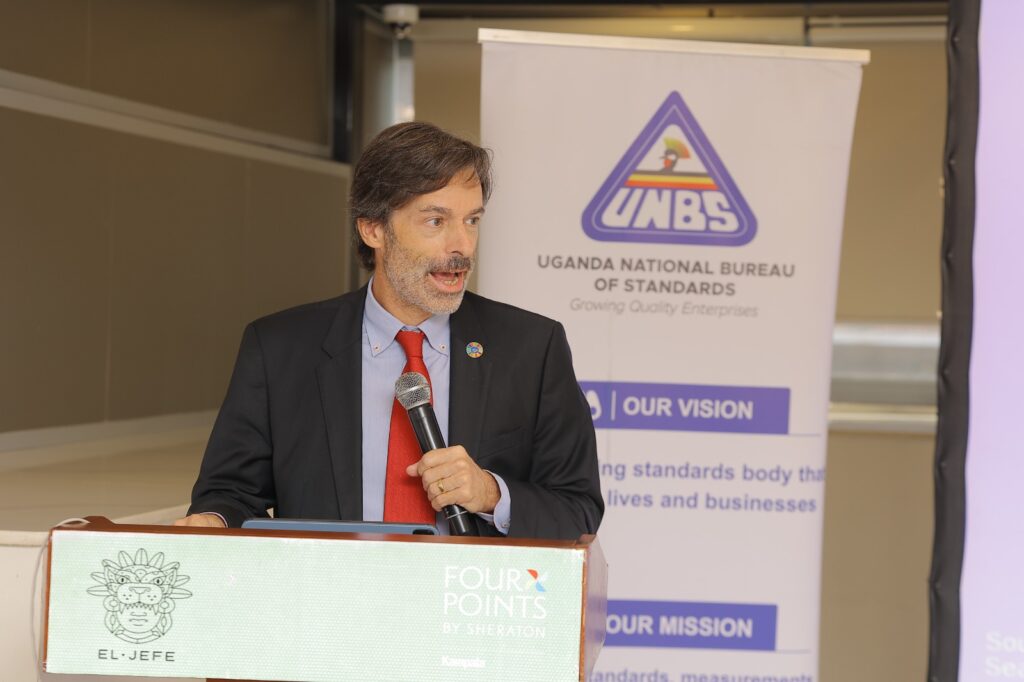
“Standards are economic infrastructure. They help businesses access markets. They reduce costs and uncertainty. They accelerate innovation. They build investor confidence and create the trust that allows economies to grow,” Metzger said.
He added that international standards provide a foundation for trust, innovation and sustainable economic growth, noting that Uganda’s participation in IEC activities gives the country an opportunity to contribute to the development of global standards while ensuring that they address the needs of local industries.
According to Metzger, stronger engagement with the IEC could help Uganda strengthen manufacturing, improve competitiveness, facilitate trade and support industrial transformation.
He identified agro-industrialisation, tourism, mineral-based industrialisation, and science, technology and innovation among the sectors that could benefit from greater use of international standards.
Metzger also highlighted the role of standards in the energy sector, saying reliable electricity is essential for manufacturing, healthcare, education, communications and transport.
He said standards can help improve safety, reliability and interoperability across electricity generation, transmission and distribution.
He further pointed to renewable energy, energy efficiency, smart grids, off-grid technologies and energy storage as areas where standards will become increasingly important as Uganda seeks to increase electricity generation capacity from 2 gigawatts to 8.3 gigawatts and expand electricity access to 85 percent of the population by 2030.
Metzger encouraged Uganda to make greater use of its IEC membership and the organisation’s network of nearly 170 countries and thousands of technical experts.
He commended UNBS for supporting the IEC National Committee and mobilising different stakeholders, describing the IEC as a “totally member-based organisation.”
Government calls for stronger participation
Mr Denise Ayinebona, Commissioner of Industry and Technology at the Ministry of Trade, Industry and Cooperatives, represented Minister Sanjay Tana at the meeting.
Aiynebona said Uganda’s participation in IEC activities provides an opportunity for the country to influence standards that will shape its technological and industrial future.
“Uganda’s participation in the IEC presents a valuable opportunity to shape the standards that will influence our technological and industrial future,” he said.
He added that embracing international standards would help Uganda protect consumers while strengthening domestic manufacturing and improving the competitiveness of local industries.
The engagement between UNBS and IEC comes at a time when Uganda is seeking to expand industrialisation, promote local manufacturing and increase participation in regional and global trade.
The two institutions are expected to continue working with government, industry, academia and other stakeholders to strengthen standards development, conformity assessment and the adoption of technologies that meet internationally recognised safety and quality requirements.